 2 months ago
75
2 months ago
75
While Yogyakarta has long been known for heritage culture and traditional food like gudeg (slow-cooked jackfruit stew) and brongkos (meat and beans stew), the city has also cemented itself as a contemporary destination brimming with food, coffee, and dessert spots.
We tried and tested some of the distinctive names to help you plan the next getaway.
BAKERIES
While bakpia (the local equivalent to Singapore’s tau sar piah) has been Yogyakarta’s pastry staple since the 1940s, the well-loved flaky snack also signifies a cultural amalgamation. First made popular by Chinese immigrants in Central Java, the original mung bean and pork version was exchanged with sweet condiments to suit the local Muslim communities. Today, Jogja welcomes a slew of European-inspired bakeries with good quality bakes, cosy spaces, and affordable pricing.
Sena - Kopi and Patisserie was originally a seven-bedroom guest house owned by a French-Indonesian couple in Kasongan, just off the city centre. When the pandemic hit, they had to adapt to the dry spell of tourists. Long story short, a quality home bakery was born alongside the inn. Sena serves classic French patisseries, including madeleines, apple crumble, and quiches. All that can be savoured alongside a selection of local coffee in a traditional Limasan house, resembling a laid-back tea time session at a friend’s house.
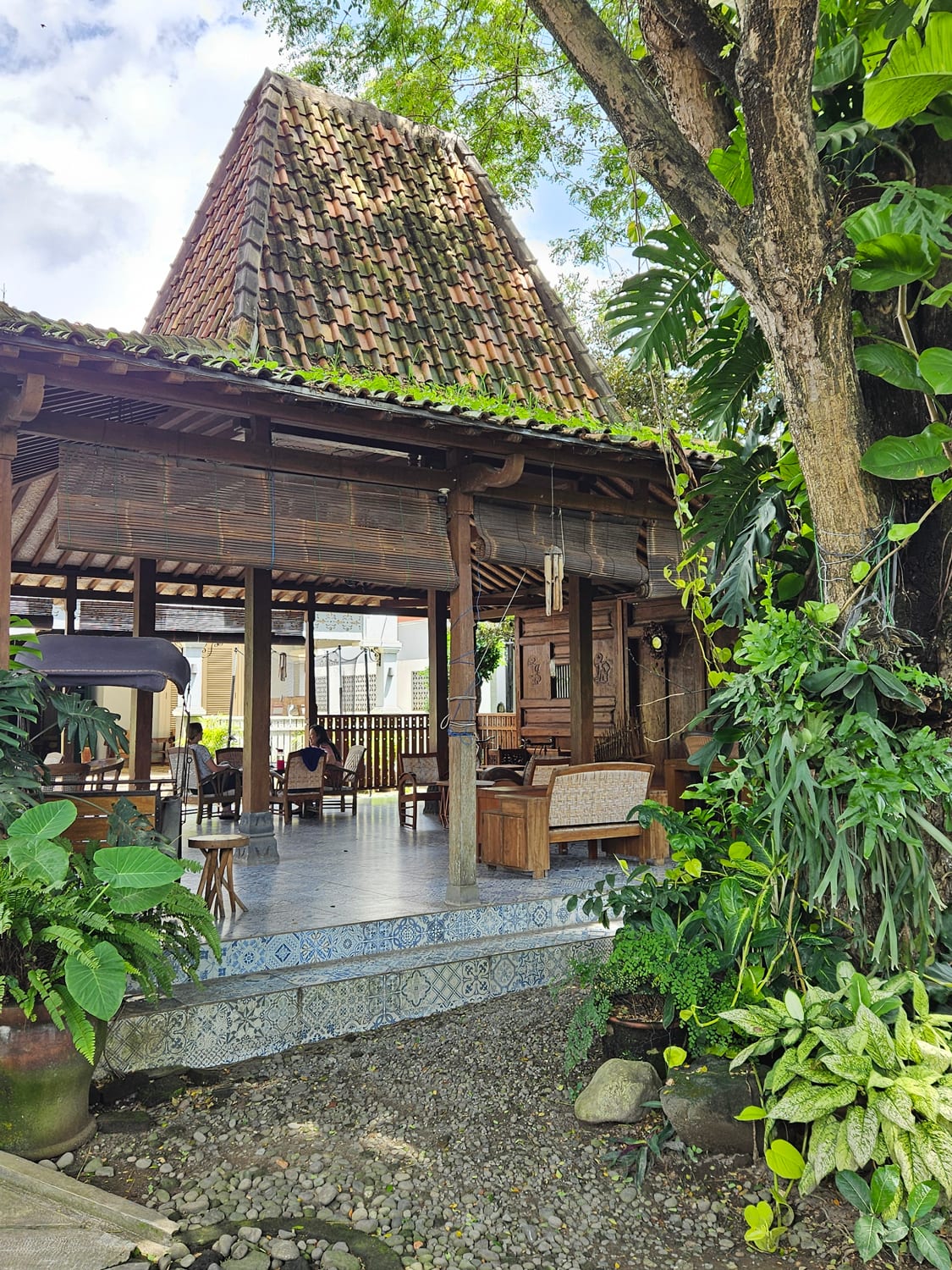 Sena is situated in a traditional Limasan house. (Photo: Cristian Rahadiansyah)
Located in Kotagede, a historic neighborhood just outside the city, Dapur Uthi of Sourdough makes you feel like visiting a friendly aunt’s house, one that is filled with the smell of warm bread right as you step in. You will find Uthi, the owner, in her kitchen, baking while taking orders and chatting with customers.
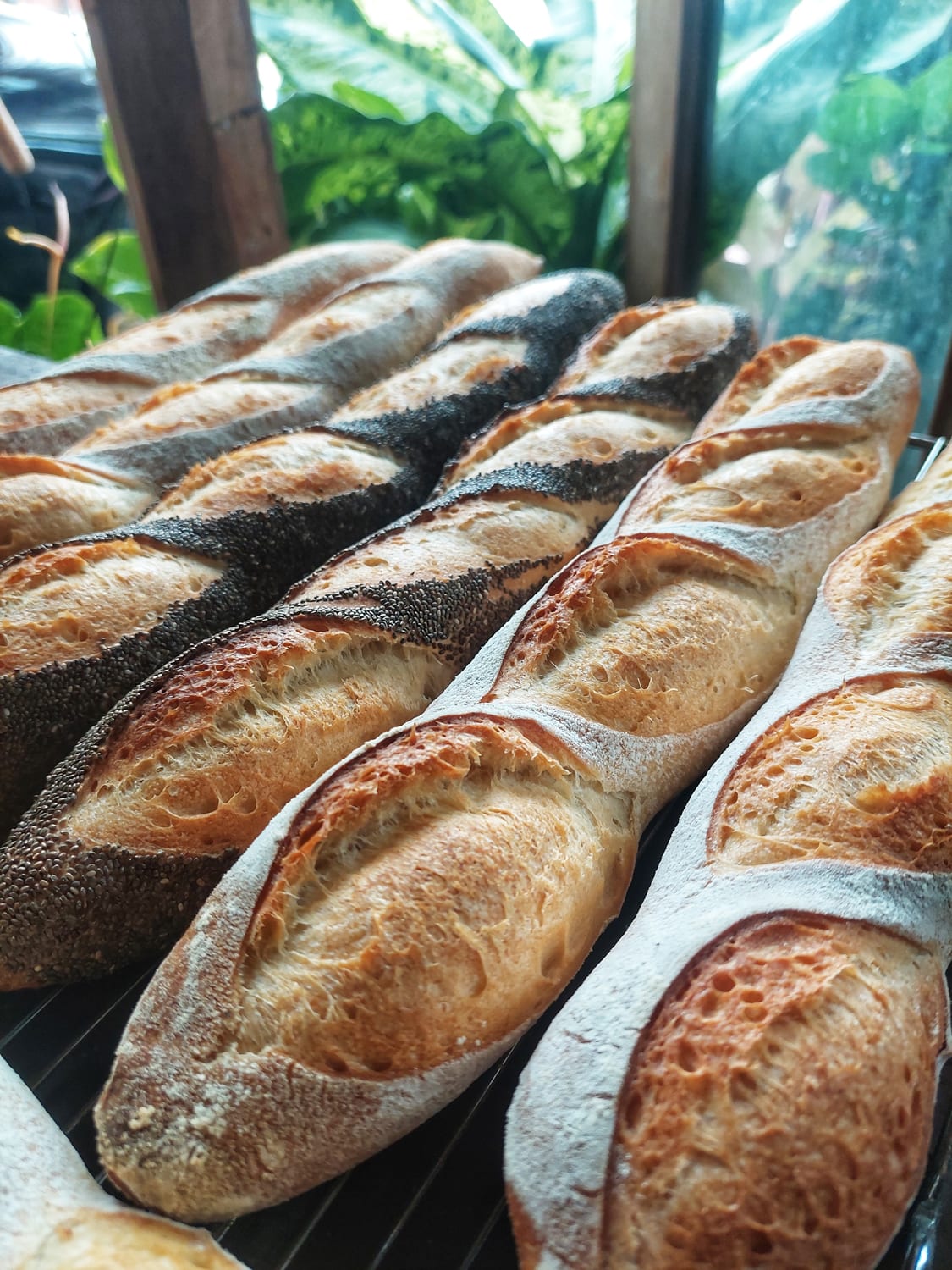 Dapur Uthi of Sourdough specialises in classic country bread and chocolate bagel. (Photo: Dapur Uthi of Sourdough)
She started selling her sourdough products – including the classic country bread and the luscious chocolate bagel – online, serving only takeaway customers. Then, in 2024, she decided to create a space for dine-in guests at her front yard. Earlier this year, she opened a small branch near Pasar Ngasem, closer to the city centre.
 (Photo: My Little Warung)
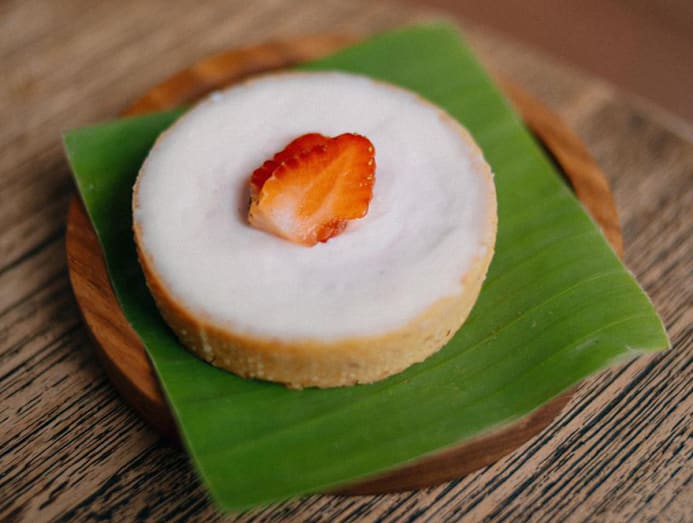 Strawberry tartelette. (Photo: My Little Warung)
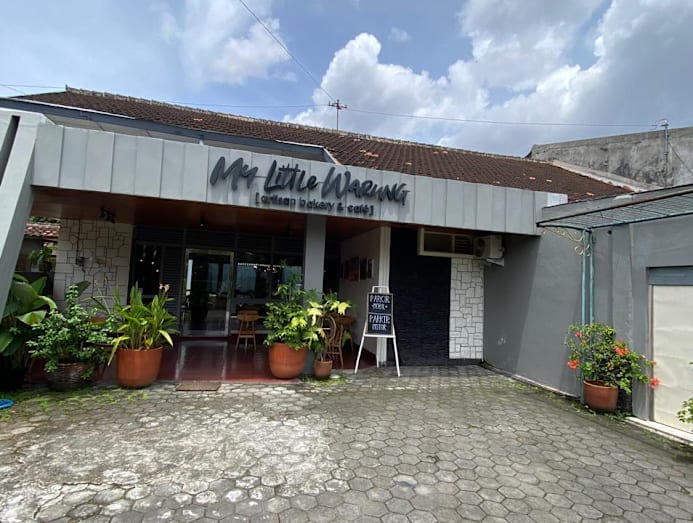
Started out as a little two-story bakery in Prawirotaman, the hippest street in Yogyakarta, My Little Warung moved to a nearby address with a bigger space (and a shiny new kitchen) designed by architecture firm Kanca Studio. One of the highlights is their range of tartelettes, including flavours such as lemon meringue and strawberry, made with owner Anais Pratt’s family recipe from Paris. If you’re not in a rush, try one of their quiches. Guests who come between 7am and 5pm can order from the warung’s all-day breakfast menu, offering classics like eggs benedict and French toast.
RESTAURANTS
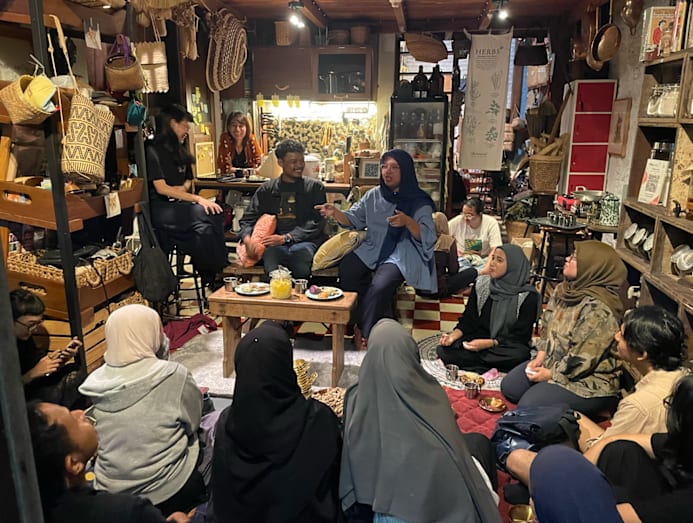 Communal dining at Bhumi Bhuvana. (Photo: Bhumi Bhuvana)
Yogyakarta’s warm hospitality makes it a perfect place to try communal table dining. In the centre of Yogyakarta, Bhumi Bhuvana regularly hosts Magic Table, where home cooks serve a full meal close to their hearts and share them with up to eight guests. Initiated by Bukhi Prima, the cosy space in Prawirotaman functions as a food archive house, and Magic Table is an avenue for Prima to introduce flavours and their origins from different places around Indonesia. Some of the staple menus include Acehnese Sambal Udeung and black sapote mousse.
Tucked within the residential area of Sleman, husband-and-wife duo Febri and Rafida of Tepikota cook up recipes from the legendary cookbook Mustikarasa for up to 20 guests per day at Rafida’s late grandmother’s house. What started as a pandemic project turned into a full-time job that features daily communal tables and cooking classes. Last November, they served, among others, grilled mackerel in creamy pecel sauce, spiced chicken sausage (Balinese urutan), and stuffed tomato. “So far, we have tried about 200 of the 500 recipes in Mustikarasa,” said Febri. He documents all the menus in the form of food illustrations.
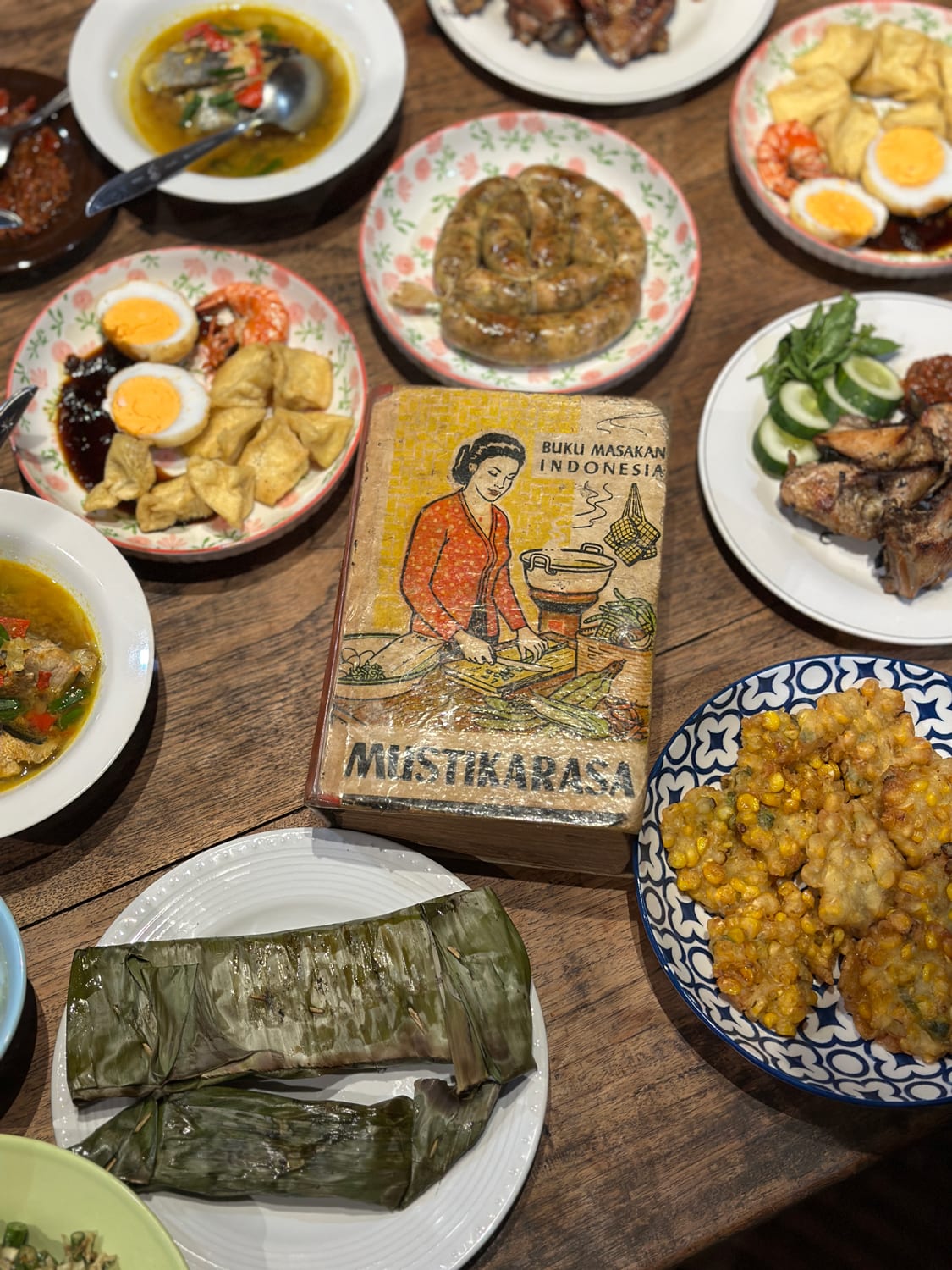 At Tepikota, husband-and-wife duo Febri and Rafida cook up recipes from the legendary cookbook Mustikarasa. (Photo: Yosephine Adin)
At Jiwajawi (translates to Soul of the Archipelago), self-taught chef Laire Siwi Mentari serves favourite dishes from different parts of Indonesia. Guests can sample ikan mangut asap (smoked fish in spicy coconut milk broth) of Central Java and ayam lado ijo (chicken in green chilli sauce) from West Sumatra, alongside Jiwajawi’s spin on Indonesian food, including sup tahu kecombrang (tofu soup with homegrown ginger flower) and nasi campur vegan (vegan mixed rice, with papaya flower’s stir-fry, steamed jackfruit, and corn fritters).
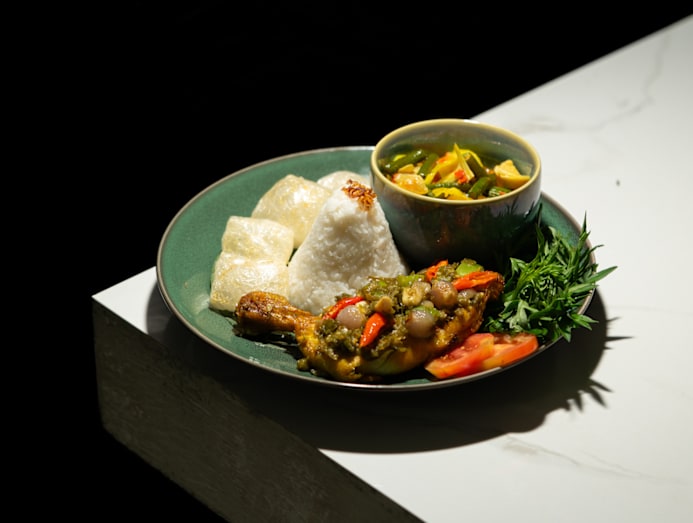 (Photo: Jiwajawi)
Dining at Jiwajawi in Bangunjiwo area is like entering an enchanted forest, away from the city’s hustle and bustle. The two-hectare complex is dense with gigantic trees, with several masses of buildings, mainly made of wood and local limestone, designed by the late respected architect, Eko Prawoto.
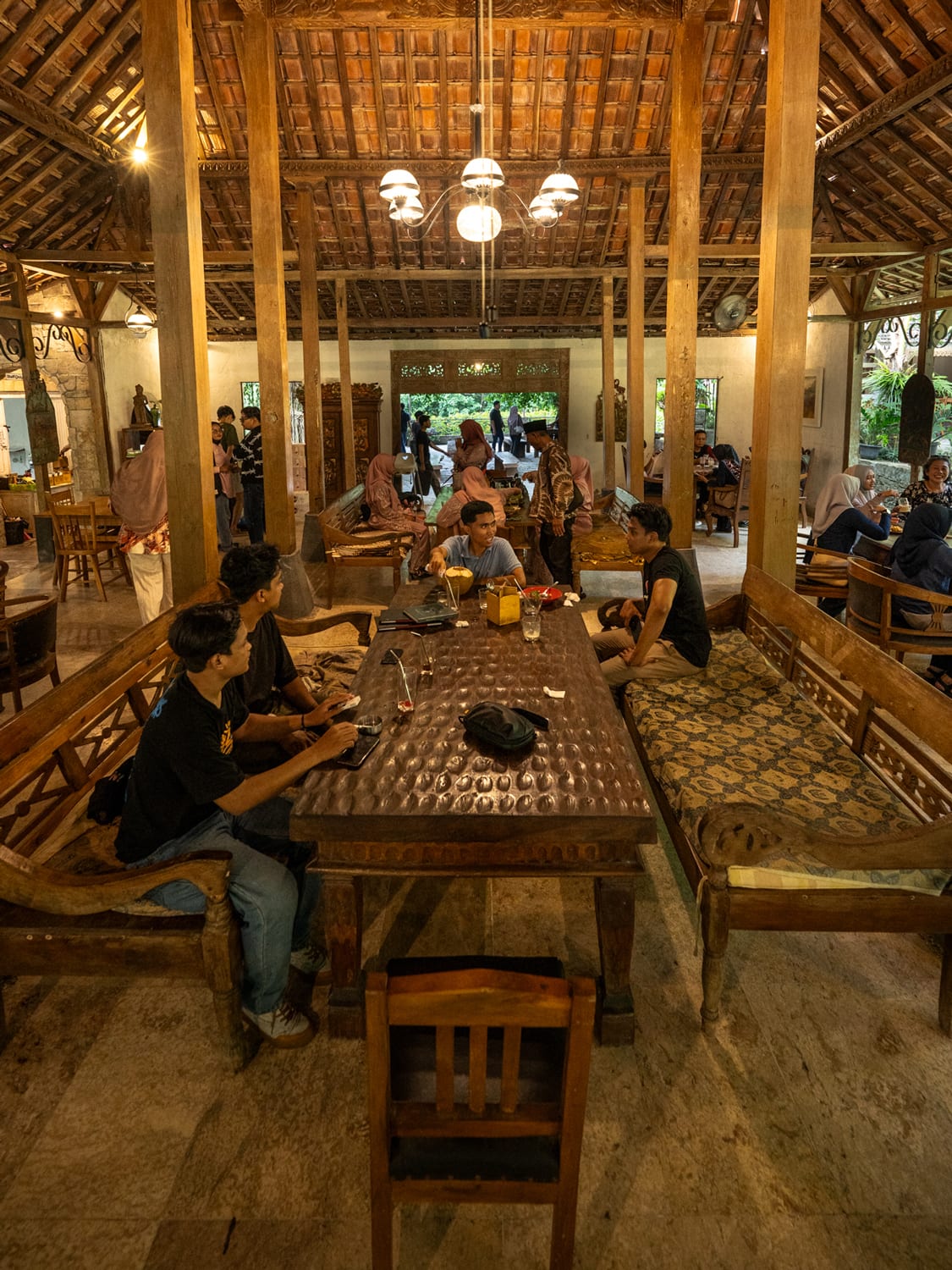 Jiwajawi is located in a two-hectare complex designed by late architect, Eko Prawoto. (Photo: Jiwajawi)
French chef Kamil (originally Camille, but dearly called Kamil since his move to Indonesia in 2008) has been a household name among Yogyakarta’s foodies since he opened Mediterranea in 2012. The restaurant serves French and Mediterranean food, with an in-house bakery producing authentic croissants and danish daily.
Its younger sister, Masama by Kamil, explores Asian flavours in its Western cooking style. Some of the standouts are duck skewers (grilled duck served with aromatic tomato paste, grilled potatoes, and green chilli sauce), and sardines cooked in Basque aromatics and olive oil. Dining at Masama is casual enough for lunch, yet memorable for its flavour profile, especially if you are into bold flavours that could please a wide range of palates.
Tucked inside a residential area in Sleman, in the north part of Yogyakarta, Fransis Pizza is a must-visit eatery among foodies. The house-turned-restaurant only serves dinners on Fridays and Saturdays, and guests must book their doughs in advance to secure seats. If you happen to be seated at the bar, you will see Fransis Magastowo, the chef-owner, deep in his element: rolling doughs and firing pizzas in his custom-built dome oven.
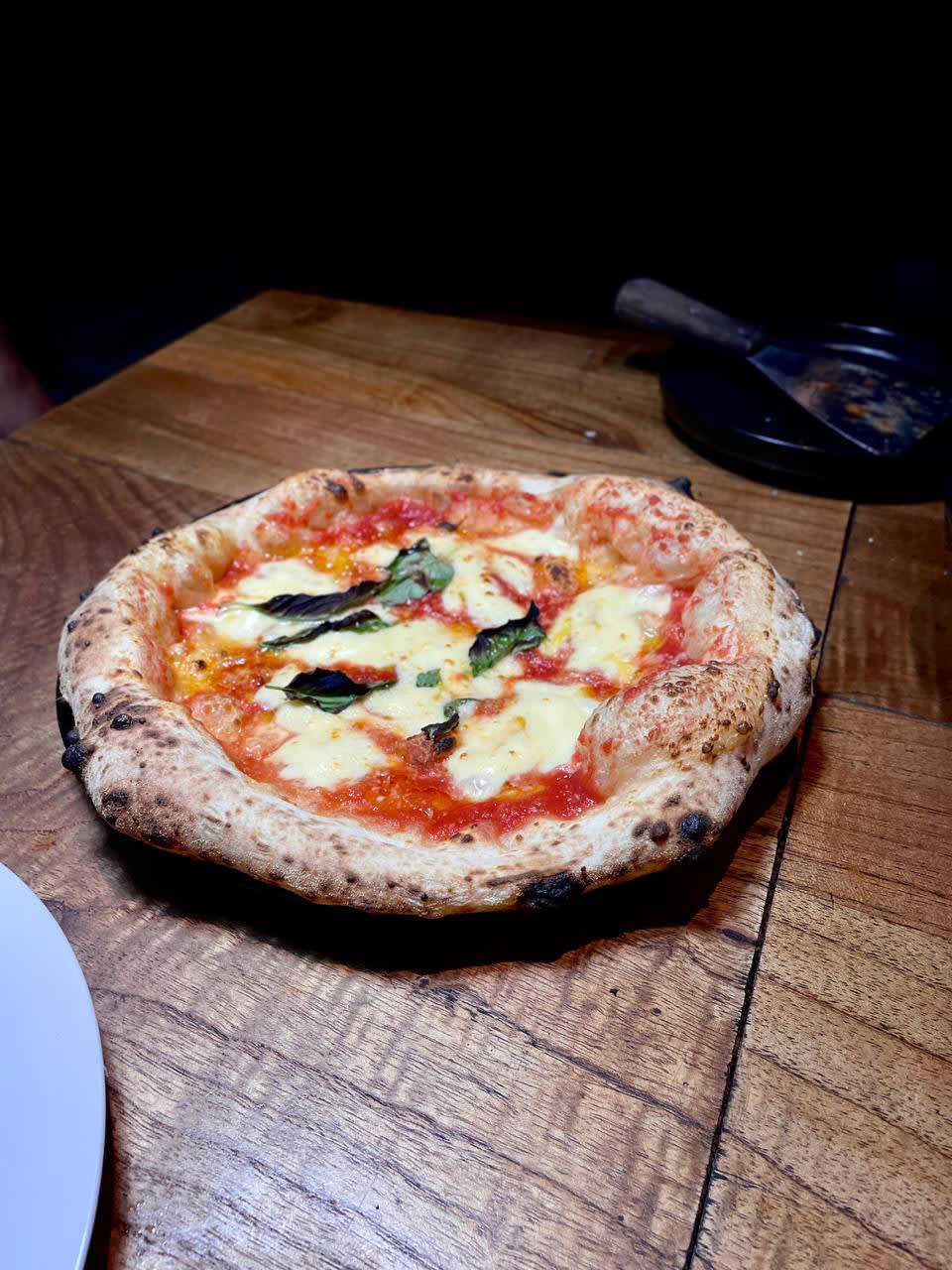 (Photo: Fransis Pizza)
Stay back until after service at 8pm, and he will happily tell you about the homemade cheese and homegrown rocket used in the pizza. Magas was a full-time director of photography before the pandemic hit and he learned a new craft. The pizzeria was a temporary project in his family home’s backyard, before it took off and became his main job.
To their peers, Marcellina Dwi Kencana and Wulang Sunu might be known for their careers in the arts. But beyond that, this husband-and-wife duo share a love for good food. Their travels around Southeast Asia inspired them to open Parot Siramami, a homey eatery serving favourites from the region including khao soi from Thailand and Singapore’s mee pok. Diners get to eat comfort food of their choice while surrounded by Sunu’s vibrant artworks on display. Siramami also actively hosts temporary exhibitions featuring young contemporary artists and kitchen pop-ups by fellow independent eateries and self-taught cooks.
To end the night, Tusen will take you to the Gatsby era while serving enjoyable bar snacks and good cocktails. Located in the newly hip Kotabaru area, the bar occupies a historical house. The cocktail creations use cheeky Indonesian names, including Negroni-based Ode Puspita and Tequila-based Sisi Ria. Three times a week, Tusen functions as a listening bar, playing tunes from their vinyl collection. It has also gained a name for itself by hosting pop-ups from the likes of Cosmo Pony (No 38 on Asia’s 50 Best Bars 2025) and award-winning mixologist Demitria "Demi" Dana Paramita of HATS.
COFFEE
Yogyakarta, according to the local chamber of commerce, has approximately 9,000 coffee shops serving its 3.8 million population. The actual numbers could be higher. Type in “coffee shop” on Google Maps and red cup icons will swarm your mobile screen.
A handful of coffee shops stand out among others, though. Just take a look at Klinik Kopi, which is considered by many as the “godfather” of slow bars in Yogyakarta. Every morning, its bamboo-shaded terrace is filled with people queuing while holding serial numbers, waiting to be summoned by Pepeng, the coffee connoisseur. Pepeng’s wife bakes a selection of pastries to go with your coffee. Earl grey scone and cheesecake with homemade blueberry jam are a must-try here.
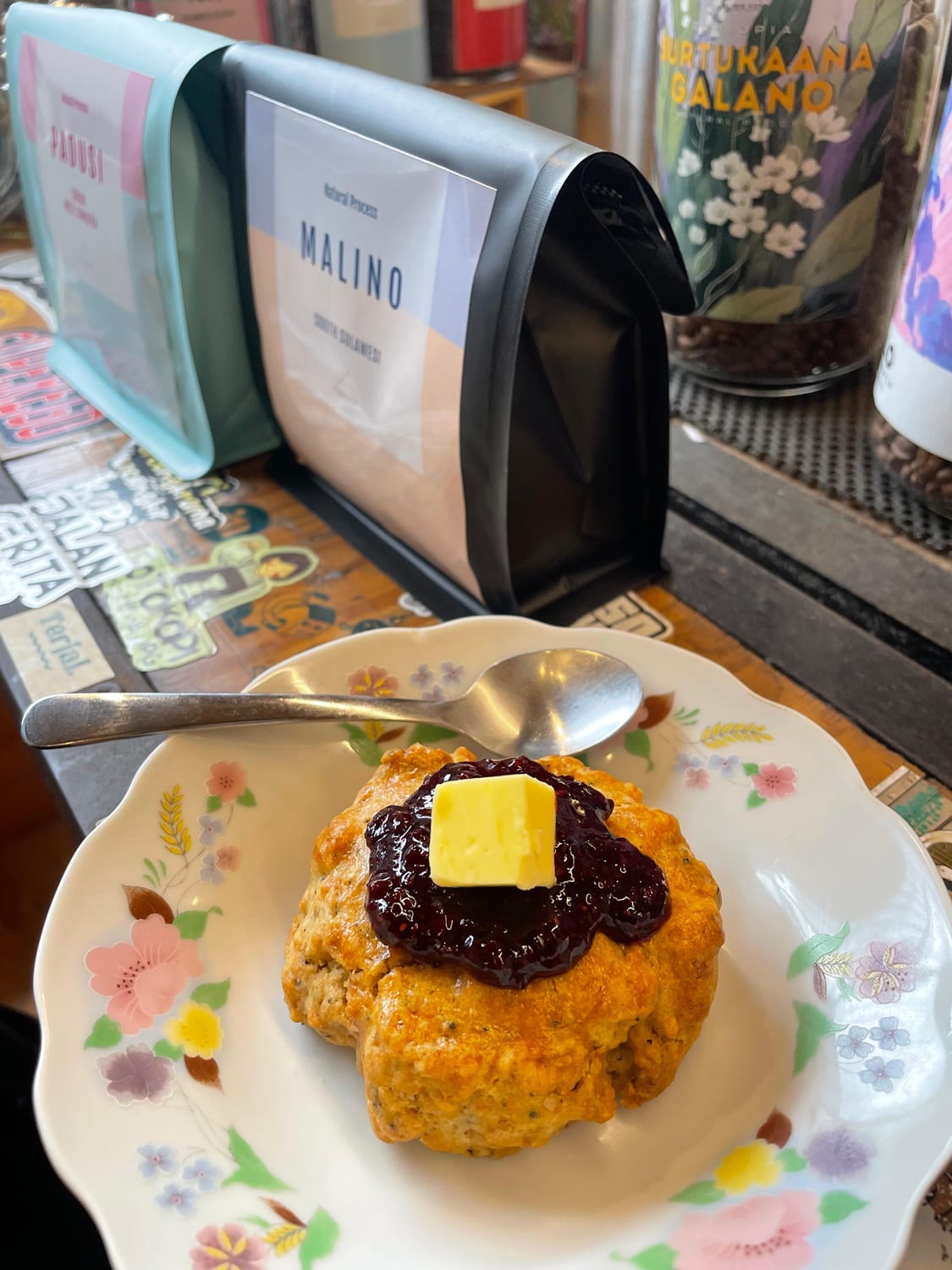 Klinik Kopi's earl grey scone. (Photo: Nina Hidayat)
The nearby Pitutur Kopi has its own loyal followers. It started as a book cafe in the central part of Yogyakarta before moving to a residential area in the north side. A typical slow bar, Pitutur stays away from additional sugar and syrup, although it’s not shy to embrace trends. London Fog was recently added to its menu and has been popular with regulars.
Initially focused only on supplying beans for cafes, To Be Honest Coffee Roaster entered the slow bar market in 2023. Tucked in a humble suburb, this high ceiling warehouse-style establishment stands out, and so does its drink lists. Hilmi, the barista-owner, specialises in pour over brews using local beans sourced from four major coffee regions: Gayo, Flores, Argopuro and Kerinci.
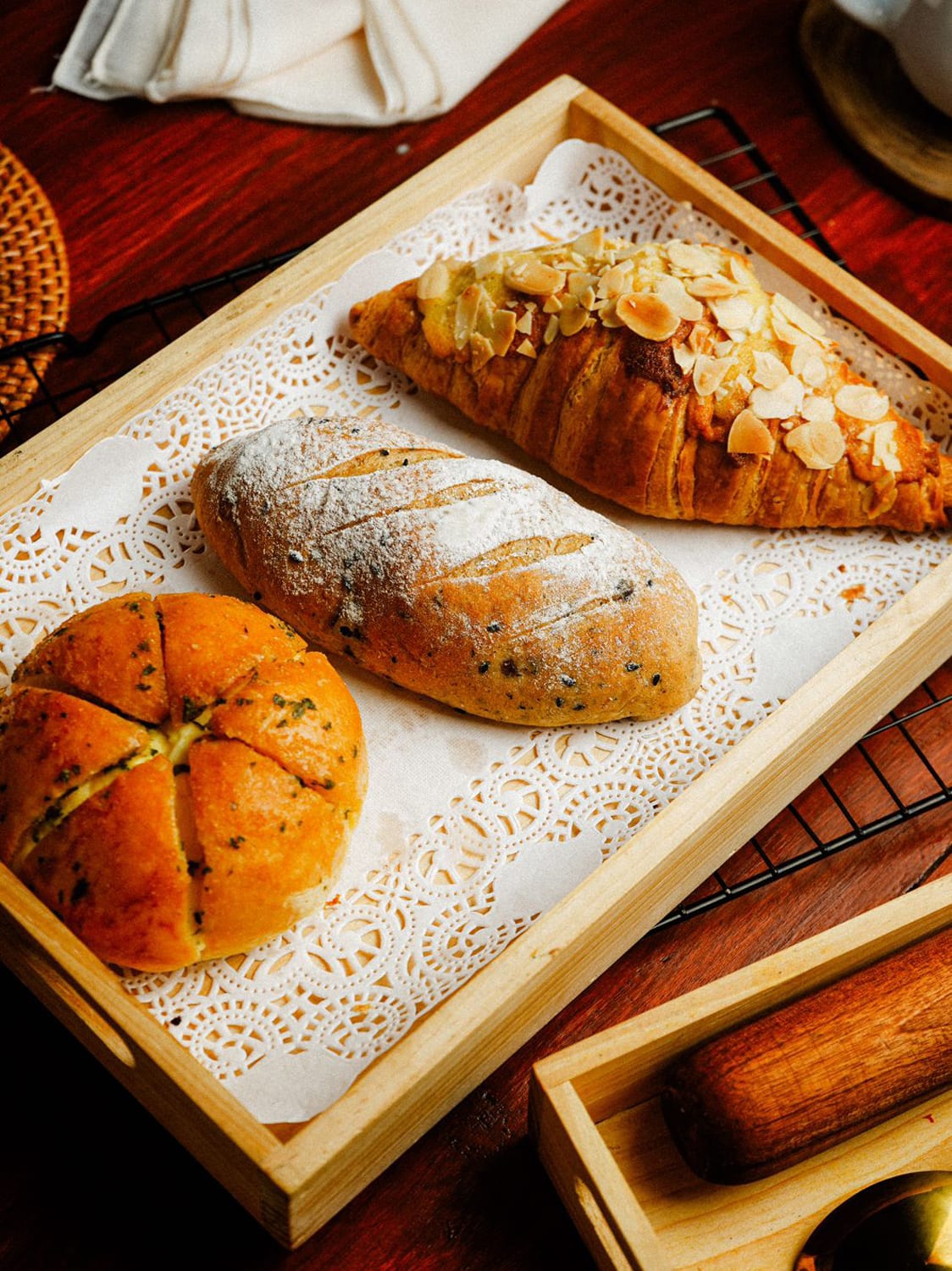 Wijen's selection of bakes. (Photo: Wijen)
Relatively new in the business, Wijen Coffee has managed to find its place in the elite league of Yogyakarta’s coffee establishments, thanks to its good curation of beans and thoughtful brewing methods. Chandra, the friendly barista-owner, rotates his beans lineup every month to offer a diverse spectrum of flavours. His cappuccino is addictive, and best enjoyed with the company of a plain croissant baked by his wife.
Additional reporting by Nina Hidayat.