 2 months ago
77
2 months ago
77
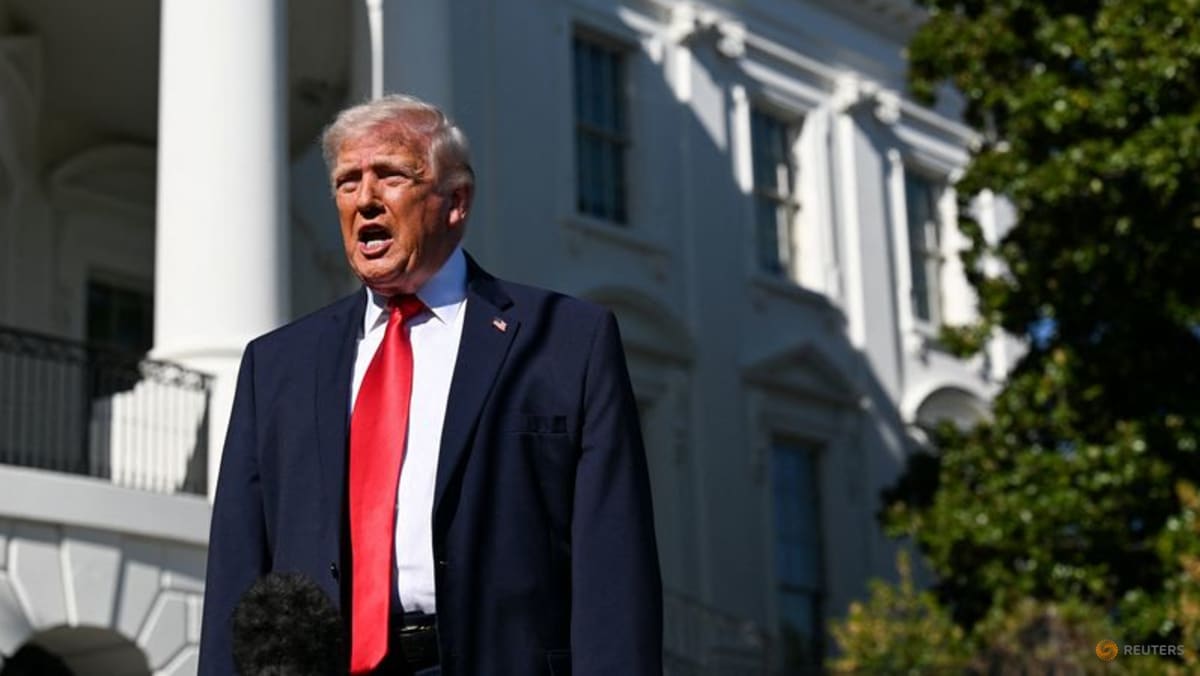
WASHINGTON: Kevin Warsh checks a long list of boxes for Donald Trump as his pick to run the Federal Reserve, with longstanding political and social ties to the US president, deep Wall Street connections and a well-tailored demeanour.
But how deeply and quickly he will cut interest rates and how aggressively he will pursue his "regime change" at the Fed remain open questions.
Trump has called for rate cuts to what amounts to crisis levels of about 1 per cent.
That's an aim Warsh, an inflation hawk in his prior term as a Fed governor from 2006 to 2011, may find too aggressive, and which economic data and the views of his 18 policymaking colleagues may make impossible.
In the aftermath of the 2008 global financial crisis, Warsh was widely seen as placing greater emphasis on inflation risks than on employment.
Rate futures remained priced for just two quarter-point rate cuts in 2026 from the current 3.5 per cent to 3.75 per cent range, and did not move appreciably after Trump announced the nomination in a social media post.
Asked what he expected Warsh to do regarding interest rates, Trump said on Saturday (Jan 31): "He's going to lower them. I mean, if you watch him on television, you know, because I watch interviews and statements. I hope he's going to lower them, but he's going to have to do what he want to do."
On whether Warsh had made any commitments to do so, Trump added: "No, because I don't want to do that. I could do that, I guess, if I wanted, but I didn't do it."
WHO IS WARSH?
Warsh, 55, was the youngest person to serve as a Fed governor.
Trump considered Warsh for the top Fed job too during his first presidency, but eventually chose outgoing Jerome Powell - a decision he quickly soured on.
Once seen as an inflation hawk favouring higher interest rates to curb price hikes and inflation, he has stepped up criticism of the Fed recently, endorsing policy positions of the Trump administration.
While Warsh's appointment requires Senate confirmation, financial services firm Morningstar reported that Natixis chief economist Christopher Hodge had sent a note to clients, saying Warsh "should have no problem being confirmed by the Senate".
Luke Bartholomew, deputy chief economist at Aberdeen Investments, also told Morningstar that Warsh’s experience on the Fed, where he developed a reputation as a competent crisis fighter with a good understanding of financial markets, and his long track record of independent thought about monetary policy means he is a credible nomination.
"I think markets are broadly happy at the moment," Atlantic Council international economics chair Josh Lipsky said.
"It is a pick that another Republican president may have made. He cares about the history of the Fed, the process of the Fed, central bank independence, he's talked about this before."
But as Trump continues to call for lower rates, analysts are monitoring if Warsh defends the bank's independence.
He will need to convince markets and policymakers that he is upholding the Fed's dual mandate of stable prices and low unemployment - despite political pressure.
Already, the Fed's job has become increasingly challenging as US tariffs fuel worries of stubborn inflation, while the employment market cools.
Policymakers walk a tightrope in deciding if they should keep rates higher to curb inflation or lower them to support the economy.
With the labour market likely deteriorating further and inflation expected to ease, the next Fed chief could uncontroversially reduce rates, said economist Samuel Tombs of Pantheon Macroeconomics.
However, it remains to be seen if he will still push for cuts if inflation proves sticky in months ahead.
Nonetheless, discussion is emerging on what impact his appointment could have on key aspects of the US economy.
US DOLLAR
The dollar pushed higher on Warsh's nomination, with investors reassured by Trump's pick, who is seen as likely to support lower interest rates but would stop well short of more aggressive easing.
The dollar had sunk to a four-year low earlier in the week. It came amid reports that the Federal Reserve Bank of New York had checked in with traders about the yen’s exchange rate, which pushed the Japanese currency to its strongest level against the greenback since November.
Analysts also told CNA that the yen was only part of the story behind the dollar’s recent weakness, with broader concerns about US policy direction and demand for US assets playing a role.
But the dollar recovered from a sharp selloff that analysts say was overdone in the short-term.
“The dollar was terribly oversold on the short-term momentum,” said Marc Chandler, chief market strategist at Bannockburn Global Forex.
Kathleen Brooks, research director at XTB trading group, said the "interesting pick ... may give the market some hope that Fed independence will be preserved."
"Most currency strategists would argue that his nomination may be good news for the dollar, which can price out some risks of a more dovish pick," said Forex.com's Fawad Razaqzada.
"However, for as long as policy uncertainty hangs over the US economy with Trump's tariff theatrics, the dollar debasement narrative is likely to hold back the greenback from making a meaningful comeback."
US DEBT
Trump has repeatedly expressed his wish for an aggressive interest rate cut. His reasons for wanting this include bringing down costs on the sizeable federal debt.
In July 2025, he claimed that bringing down rates by three points would save "one trillion dollars a year".
If the Fed were to give into Trump's demands by lowering interest rates by more than necessary, "history suggests that the likely result would be unwelcome inflation", economics journalist and analyst David Wessel said in a commentary for Brookings Institution, an American think tank.
"Lower rates tend to stimulate borrowing and faster economic growth, and when demand grows faster than supply, prices rise," Mr Wessel wrote.
He cited examples from the latter part of the 20th century, when Argentina, Brazil, and Israel experienced high inflation due to their banks keeping interest rates low during periods of large budget deficits.
Speaking at an economic panel on Jan 4, former treasury secretary Janet Yellen said: "Should we be concerned about the potential for fiscal dominance? In my opinion, the answer is 'yes'."
Fiscal dominance occurs when government borrowing is so large that the central bank is pressured to keep interest rates low to reduce borrowing costs, even if economic conditions call for higher interest rates.
"Fiscal dominance is dangerous because it typically results in higher and more volatile inflation or politically driven business cycles," Yellen said.
"Preconditions for fiscal dominance are clearly strengthening", as the federal debt is on a steep upward trajectory, she added.
Wessel said that due to much of the federal government's debt being short-term, inflation will not do much to lighten the burden of debt.
"When it matures, it will be replaced by debt at then-current interest rates, and those rates will be higher if there’s more inflation."
As the US government is running big deficits, it also has to borrow more every year at current interest rates.
MORTGAGE RATES
Warsh has suggested the central bank can play a role in bringing mortgage rates down, with housing affordability an increasingly prominent political issue in the US, Yahoo Finance said in an analysis.
Speaking to Fox Business last year, Warsh said lower interest rates could help revive the housing market by making home loans more affordable.
"We can lower interest rates a lot, and in so doing, get 30-year fixed-rate mortgages so they’re affordable, so we can get the housing market to get going again," Warsh told the news outlet.
Lenders in Singapore typically follow the cues of the Fed, with experts previously telling CNA that low mortgage rates could extend into 2026 – though further declines may be modest.
Warsh's remarks closely align with Trump, who has repeatedly criticised Powell for being “too late” to cut interest rates, Yahoo Finance pointed out. He has argued that higher borrowing costs have weighed on consumers and homebuyers. While the Fed does not directly set mortgage rates, its policy decisions can strongly influence where they go.
Mortgage rates are more closely tied to longer-term government bond yields, particularly the 10-year US Treasury yield.
When investors expect inflation to remain high, they often demand higher yields on long-term bonds to offset the loss of purchasing power over time, the Yahoo Finance report said. That can push mortgage rates higher, even if the Fed is cutting short-term rates.
As such, some economists warn that aggressively cutting interest rates to try to lower mortgage costs could have the opposite effect if investors fear inflation will re-accelerate.
“An explicit focus on cutting its policy rate to lower longer-term rates could backfire,” said Jake Krimmel, senior economist at Realtor.com, in a statement.
GOLD
Gold and silver prices, viewed as safe-haven investments, dived on Friday after surging in recent days when investors sought a safe haven over doubts about Trump's policies, heightened global instability, concerns over the Fed’s independence, and speculative excess.
Gold fell as much as 12 per cent at one point, retreating below US$5,000 an ounce after hitting a record high near US$5,600 on Thursday.
Silver, which on Thursday reached an all-time peak above US$120 an ounce, shed around 30 per cent to about US$82 an ounce.
The selloff in gold and silver, alongside declines in equity markets, suggests investors see interest rate cuts as less likely under Warsh than under alternative candidates, said Henry Maher from the University of Sydney in an analysis for The Conversation.
Gold and silver typically benefit from uncertainty, inflation fears and expectations of looser monetary policy, and their sharp pullback points to a reassessment of those risks.
Early indications suggest markets are now pricing in lower inflation expectations and greater financial stability.
CRYPTO
Bitcoin and other cryptocurrencies have been regarded as beneficiaries of a large balance sheet, having tended to rally while the Fed greased money markets with liquidity - a support for speculative assets.
Some investors and traders are, however, concerned Warsh might tighten up on cash in the financial system. He has signalled he wants, among other things, a smaller Fed balance sheet.
Brian Jacobsen, chief economist at Annex Wealth Management in Menomonee Falls, Wisconsin, said the Fed's "bloated balance sheet combined with heavy-handed bank regulation" had kept liquidity trapped on Wall Street instead of flowing to Main Street, helping fuel bubbles in assets such as bonds, crypto, metals and meme stocks.
"Sometimes these price adjustments feed on themselves," Jacobsen said, adding that Friday’s abrupt drop - bitcoin fell to as low as US$81,104, its lowest price since Nov 21, 2025 - had reminded people of the risks. He said it was "possible, if not likely, that we see more selling over the next few days.
Cryptos are having a rough time in what was once hoped to be a golden era of flows and friendly regulation under President Donald Trump. Market-leading bitcoin has lost a third of its value since striking record highs in October last year.
THWARTING "INSTITUTIONAL DRIFT"
The Fed particularly in the last 20 years has become a complex, hybrid beast that grew with an expansion of power during the financial crisis and through the pandemic.
That may be just what Warsh has in mind in his criticism.
The Fed's mix of monetary policy powers, considered its sole province, along with the sort of regulatory authority that is usually situated in the executive branch, and controlling legislation set by Congress, has left even Supreme Court justices puzzled about exactly where the Fed fits in the federal system.
The question came up as the court considered whether Trump could fire Governor Lisa Cook, a question that becomes more tangled the more distant the Fed is seen as being from the US administration.
Some parts of what Warsh and others have criticised as "institutional drift" could be resolved internally. Under Powell, and given the direction of the Trump administration, for example, the Fed already stopped its involvement in a global climate change consortium and scaled back its work on issues around diversity, equity and inclusion.
The chair could shift the tone of Fed communications, discourage the array of speeches from the 12 reserve bank presidents or even other governors to more closely control the messaging, or work more closely with Treasury Secretary Scott Bessent and recast the Fed's relationship with the Treasury.
Warsh "appears to be predisposed to make more fundamental changes ... particularly in the way the committee approaches forward guidance, relying too much on near-term forecasting and increased data-dependence," analysts with TD Securities wrote in an analysis of his nomination.
He will, however, have to contend with a president who has relentlessly criticised his predecessor and made no secret of his preference for much lower interest rates.
Before landing on Warsh, Trump said in a speech to the World Economic Forum at Davos, Switzerland, last month: "They get the job, and all of a sudden, 'Let's raise rates a little bit,'. It's amazing how people change once they have the job.
"It's too bad, sort of disloyalty."